
Working · Rank #16 Most Popular Dog Breed
Boxer
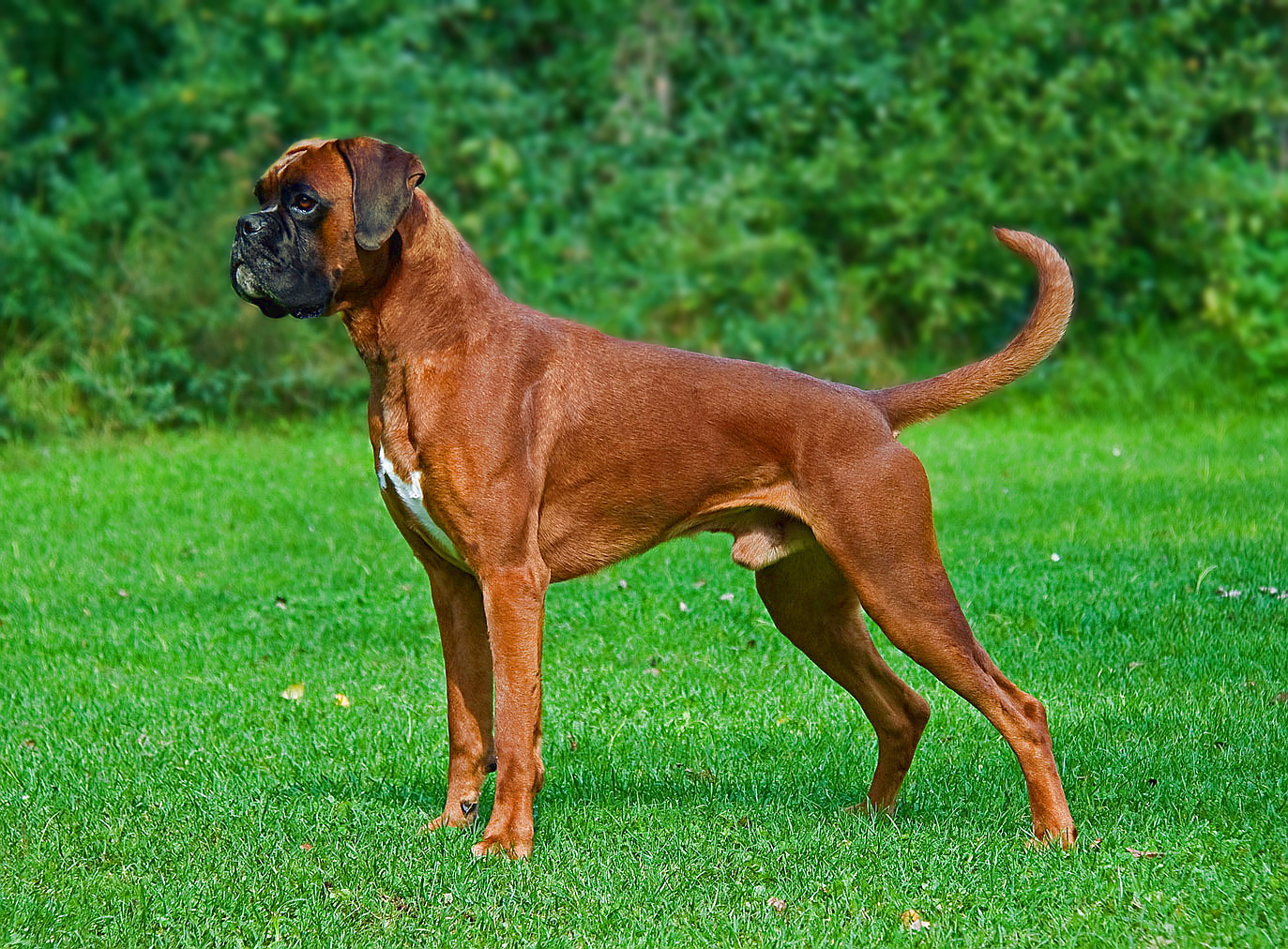
The Boxer originated in Germany in the late 19th century, descended from mastiff-type dogs used for hunting and guarding. They are medium-to-large dogs with a powerful, athletic build and a distinctive square muzzle. Boxers are known for their playful, exuberant personality and deep devotion to their families. They are widely regarded as excellent family dogs and reliable working dogs.
Ideal Weight
25-32 kg
Height
53-63 cm
Activity Level
High (Working/Athletic)
Life Expectancy
10-12 yrs
Feeding Guide
Boxers are prone to obesity and bloat, so feeding two portioned meals daily rather than free-feeding is strongly advised. Avoid feeding immediately before or after exercise to reduce bloat risk. A diet rich in lean protein supports their muscular physique.
Water Needs
Boxers are a brachycephalic breed and can overheat quickly; ensure they always have access to cool, fresh water, especially during and after exercise in warm conditions.
Exercise Guide
Boxers need at least 1–2 hours of active exercise daily, including running, fetch, and interactive play. Their brachycephalic anatomy means outdoor activity in extreme heat should be limited and monitored carefully.
Common Health Issues in Boxers
- Aortic Stenosis
- Dilated Cardiomyopathy
- Hip Dysplasia
- Degenerative Myelopathy
- Bloat (GDV)
These are conditions commonly associated with the breed, not a diagnosis for your individual pet.
Boxer Calorie Calculator
Estimated Daily Calories
1933 kcal
5.5
Cups / day
663
Grams / day
Based on a generic 350 kcal/cup food. Use the full Calorie Calculator to enter your food's exact calorie density.
Boxer FAQs
How much should I feed a Boxer?
Boxers are prone to obesity and bloat, so feeding two portioned meals daily rather than free-feeding is strongly advised. Avoid feeding immediately before or after exercise to reduce bloat risk. A diet rich in lean protein supports their muscular physique. For a personalized daily calorie and portion estimate based on your Boxer's exact weight, age, and activity level, use the calculator above or our full Calorie Calculator.
How much exercise does a Boxer need?
Boxers generally have high exercise needs. Boxers need at least 1–2 hours of active exercise daily, including running, fetch, and interactive play. Their brachycephalic anatomy means outdoor activity in extreme heat should be limited and monitored carefully.
How much water does a Boxer need?
Boxers are a brachycephalic breed and can overheat quickly; ensure they always have access to cool, fresh water, especially during and after exercise in warm conditions. As a general guideline, most dogs need roughly 50-60 ml of water per kg of body weight daily -- use our Water Intake Calculator for an estimate based on your pet's exact weight.
What health issues are common in Boxers?
Boxers are commonly associated with Aortic Stenosis, Dilated Cardiomyopathy, Hip Dysplasia, Degenerative Myelopathy, and Bloat (GDV). This is general educational information, not a diagnosis -- regular veterinary checkups are the best way to catch and manage breed-related conditions early.
How big does a Boxer get?
A fully grown Boxer typically weighs 25.0-32.0 kg (55-71 lbs) and stands about 53-63 cm (21-25 in) tall at the shoulder, with a typical life expectancy of 10-12 years.
Medical Disclaimer
This tool provides general, educational estimates and is not a substitute for professional veterinary advice, diagnosis, or treatment. Breed-based estimates for the Boxer are general guidance and vary by individual dog or cat. Always consult your veterinarian about your pet's specific health needs before making changes to their diet, water intake, or care routine.
Related Dog Breeds
Compare the Boxer to Another Breed
From the Blog
Pancreatitis in Dogs: What to Feed During Recovery
A practical guide to feeding a dog recovering from pancreatitis — what to feed, what to avoid, and how to rebuild a normal diet safely once your vet gives the go-ahead.
How to Transition Your Dog to a New Food Without Stomach Upset
Switching dog food too quickly is one of the most common causes of diarrhea and vomiting in otherwise healthy dogs. Here's a gradual transition schedule that actually works.
Boxer Feeding Guide
Boxers are muscular, energetic dogs with a real bloat risk — getting portions, meal timing, and diet quality right is essential. This guide covers daily feeding amounts, life-stage needs, and breed-specific quirks.
Boxer Ideal Weight Guide
Boxers carry significant muscle mass that can mask excess fat — knowing the healthy weight range and how to read a Boxer's body condition is the key to keeping this breed in top shape.
Boxer Growth Chart: What to Expect
Boxers are a large breed that matures more slowly than small dogs — most reach full adult size between 18 and 24 months. Here's what healthy growth looks like at each stage.
How Many Calories Should a Boxer Eat?
A Boxer's daily calorie needs depend on weight, age, activity level, and reproductive status. This guide walks through realistic daily estimates and the breed-specific factors that shift the number.
Boxer Puppy Guide
Raising a Boxer puppy well means understanding their large-breed growth requirements, high energy output, and early training needs. This guide covers feeding, growth, and key care milestones from puppyhood through 18 months.
Boxer Senior Care Guide
Boxers are considered senior from around 7 years of age, and this life stage brings specific health priorities — particularly cardiac and joint health. Here's how to adjust feeding, exercise, and monitoring as your Boxer ages.
More Tools
Calorie Calculator
Full calorie calculator with custom food density.
Weight Checker
Check if your Boxer is at a healthy weight.
Body Condition Score Calculator
Assess your Boxer's body condition with a simple visual score.
Dog Age Calculator
Convert your Boxer's age into human years.
Water Intake Calculator
Estimate how much water your Boxer needs daily.
All Dog Breeds
Browse the top 50 dog breeds.