
Sporting · Rank #2 Most Popular Dog Breed
Golden Retriever
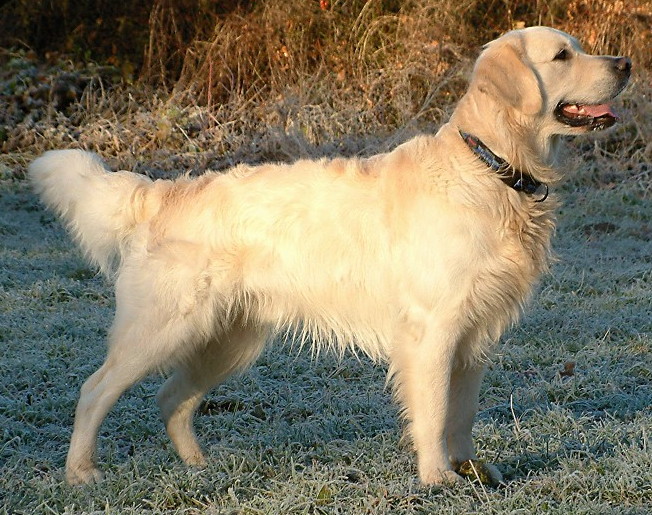
The Golden Retriever was developed in the Scottish Highlands in the late 19th century by Lord Tweedmouth, who crossed a yellow retriever with the now-extinct Tweed Water Spaniel. Originally bred to retrieve waterfowl during hunts, the breed became celebrated worldwide for its gentle temperament and trainability. Goldens are affectionate, patient family dogs that also excel as therapy and service animals.
Ideal Weight
25-34 kg
Height
51-61 cm
Activity Level
High (Working/Athletic)
Life Expectancy
10-12 yrs
Golden Retriever History
The Golden Retriever was developed in the Scottish Highlands in the mid-to-late 1800s by Dudley Marjoribanks, later Lord Tweedmouth, who wanted a skilled retriever suited to the wet climate and marshy terrain of his Guisach estate. He crossed a yellow-coated Wavy-Coated Retriever named Nous with a Tweed Water Spaniel (a breed now extinct), and later added Irish Setter, Bloodhound, and additional Wavy-Coated Retriever bloodlines to refine the type. The resulting dogs combined a keen nose, a soft mouth for retrieving downed birds undamaged, and an even, biddable temperament. The breed was recognized by the English Kennel Club in 1913 and by the American Kennel Club in 1925, and it has since become one of the most popular family and service dog breeds in the world.
Appearance
Golden Retrievers have a well-proportioned, athletic body with a broad skull, friendly dark eyes, and a distinctive dense, water-repellent double coat that can be straight or wavy. Their signature lustrous golden coat ranges from pale cream to a rich, deep gold, often with lighter feathering on the chest, legs, and tail. They have a kind, intelligent expression that is considered a hallmark of correct breed type, and a sturdy, well-balanced frame built for a full day of fieldwork.
Personality & Temperament
Golden Retrievers are famous for their patient, gentle, and endlessly friendly disposition -- traits that have made them a top choice for therapy work, guide-dog programs, and families of all kinds. They are deeply people-oriented, eager to please, and generally get along well with children, strangers, and other pets. Goldens mature more slowly than many breeds, often retaining a playful, puppyish enthusiasm well into adulthood, and they can be prone to separation-related distress if left alone for extended periods.
Intelligence
Golden Retrievers are highly intelligent and rank near the top of most working-dog intelligence studies, close behind Border Collies and Poodles. Their intelligence is paired with a strong desire to cooperate with people, which is why they excel not just in obedience and agility, but in complex service roles like guide work, hearing-assistance, and search-and-rescue.
Trainability
This is one of the most trainable breeds in existence. Golden Retrievers respond enthusiastically to reward-based training, learn new cues quickly, and generally aim to figure out what their handler wants. Early socialization and basic obedience are still important, both to channel their energy productively and to curb an adolescent tendency toward mouthing and jumping.
Feeding Guide
Golden Retrievers have a tendency toward weight gain and should be fed measured portions twice daily rather than free-fed. Adults generally do well on 2–3 cups of high-quality kibble per day depending on size and activity. Their love of food makes them great candidates for positive reinforcement training, but treats should be factored into daily caloric limits.
Water Needs
Goldens are active dogs that require plenty of fresh water, particularly after exercise or play sessions outdoors. Their thick double coat can make them susceptible to overheating in hot conditions, so hydration is especially important in summer.
Exercise Guide
Golden Retrievers require at least 60 minutes of exercise per day, ideally split into two sessions. They love swimming, fetching, hiking, and agility activities. Without adequate daily exercise, they may develop anxiety or destructive habits.
Want an exact daily calorie target? Use the full Calorie Calculator or check hydration needs with the Water Intake Calculator.
Common Health Issues in Golden Retrievers
- Hip dysplasia
- Cancer (higher incidence than many breeds)
- Heart issues (subvalvular aortic stenosis)
- Skin conditions and allergies
These are conditions commonly associated with the breed, not a diagnosis for your individual pet.
Curious how age affects your Golden Retriever's health risk profile? Try the Dog Age Calculator to see their age in human years.
Grooming Needs
Golden Retrievers require more grooming than their short-coated retriever cousins. Their dense double coat should be brushed at least 2-3 times per week to prevent matting, particularly around the ears, legs, and tail feathering, and more often during heavy seasonal shedding. Regular bathing (roughly every 4-6 weeks), routine ear cleaning to prevent infections in their floppy ears, and frequent nail trims round out their grooming routine.
Coat & Colors
The breed's coat is dense and water-repellent with moderate feathering on the back of the legs, underbody, and tail. Recognized shades range from light golden to dark golden; overly light (near-white) or mahogany/red shades fall outside the official breed standard, though many pet-quality Goldens exist across this broader spectrum.
Is a Golden Retriever Right for Your Household?
Good with Children
High
Golden Retrievers are widely regarded as one of the best breeds for families with children, combining patience, gentleness, and a high tolerance for rough-and-tumble play.
Good with Dogs
High
Goldens are typically very sociable with other dogs and thrive in multi-dog households or social settings like dog parks.
Good with Cats
High
Their generally low prey drive and easygoing nature mean most Golden Retrievers can live comfortably with cats, particularly with a proper introduction.
Indoor vs. Outdoor Living
Golden Retrievers should live indoors as part of the family, with regular outdoor time for exercise and play; they bond closely with their people and don't do well isolated in a yard or kennel long-term.
Climate Suitability
Their dense double coat provides good cold-weather tolerance, but it also means Goldens are more prone to overheating in hot, humid conditions, so exercise should be adjusted and shaded, cool water made available during warm weather.
Pros of the Golden Retriever
- Exceptionally friendly, gentle, and family-oriented
- Among the easiest breeds to train
- Excellent with children and other pets
- Versatile working ability: therapy, service, hunting, and sport
- Loyal and eager to be involved in family activities
Cons of the Golden Retriever
- Heavy, near-constant shedder that requires regular brushing
- Higher-than-average cancer risk compared to many breeds
- Needs substantial daily exercise and mental stimulation
- Prone to separation anxiety if left alone too often
- Susceptible to skin allergies and ear infections
Golden Retriever Calorie Calculator
Estimated Daily Calories
1984 kcal
5.7
Cups / day
680
Grams / day
Based on a generic 350 kcal/cup food. Use the full Calorie Calculator to enter your food's exact calorie density.
Fun Facts About the Golden Retriever
- Golden Retrievers are one of the few breeds whose entire foundational lineage was documented by their founder, Lord Tweedmouth, in a personal stud book.
- The breed consistently ranks in the top 5 most popular dog breeds registered by the AKC.
- Golden Retrievers have a noticeably higher lifetime cancer rate than most breeds, a topic of ongoing veterinary research including the Morris Animal Foundation's long-term Golden Retriever Lifetime Study.
- Many Golden Retrievers instinctively carry objects in their mouth -- not out of possessiveness, but as an outlet for their retrieving heritage.
Golden Retriever FAQs
How much should I feed a Golden Retriever?
Golden Retrievers have a tendency toward weight gain and should be fed measured portions twice daily rather than free-fed. Adults generally do well on 2–3 cups of high-quality kibble per day depending on size and activity. Their love of food makes them great candidates for positive reinforcement training, but treats should be factored into daily caloric limits. For a personalized daily calorie and portion estimate based on your Golden Retriever's exact weight, age, and activity level, use the calculator above or our full Calorie Calculator.
How much exercise does a Golden Retriever need?
Golden Retrievers generally have high exercise needs. Golden Retrievers require at least 60 minutes of exercise per day, ideally split into two sessions. They love swimming, fetching, hiking, and agility activities. Without adequate daily exercise, they may develop anxiety or destructive habits.
How much water does a Golden Retriever need?
Goldens are active dogs that require plenty of fresh water, particularly after exercise or play sessions outdoors. Their thick double coat can make them susceptible to overheating in hot conditions, so hydration is especially important in summer. As a general guideline, most dogs need roughly 50-60 ml of water per kg of body weight daily -- use our Water Intake Calculator for an estimate based on your pet's exact weight.
What health issues are common in Golden Retrievers?
Golden Retrievers are commonly associated with Hip dysplasia, Cancer (higher incidence than many breeds), Heart issues (subvalvular aortic stenosis), and Skin conditions and allergies. This is general educational information, not a diagnosis -- regular veterinary checkups are the best way to catch and manage breed-related conditions early.
How big does a Golden Retriever get?
A fully grown Golden Retriever typically weighs 25.0-34.0 kg (55-75 lbs) and stands about 51-61 cm (20-24 in) tall at the shoulder, with a typical life expectancy of 10-12 years.
Why do Golden Retrievers have a higher cancer risk?
Golden Retrievers have a genetically higher predisposition to certain cancers, including hemangiosarcoma and lymphoma, than many other breeds. Researchers believe this is linked to the breed's relatively narrow genetic founding population; regular veterinary checkups can help catch issues earlier.
Are Golden Retrievers hypoallergenic?
No. Golden Retrievers shed heavily year-round and are not considered hypoallergenic. People with dog allergies should spend time with the breed before committing, or consider a lower-shedding breed.
How much grooming do Golden Retrievers need compared to Labradors?
Golden Retrievers generally need more frequent brushing than Labradors because of their longer, feathered double coat, which is more prone to matting and tangling.
References
Medical Disclaimer
This tool provides general, educational estimates and is not a substitute for professional veterinary advice, diagnosis, or treatment. Breed-based estimates for the Golden Retriever are general guidance and vary by individual dog or cat. Always consult your veterinarian about your pet's specific health needs before making changes to their diet, water intake, or care routine.
Related Dog Breeds
Compare the Golden Retriever to Another Breed
Golden Retriever vs Labrador Retriever
See how the Golden Retriever and Labrador Retriever compare side by side: weight, height, activity, health & more.
Golden Retriever vs German Shorthaired Pointer
See how the Golden Retriever and German Shorthaired Pointer compare side by side: weight, height, activity, health & more.
From the Blog
How to Transition Your Dog to a New Food Without Stomach Upset
Switching dog food too quickly is one of the most common causes of diarrhea and vomiting in otherwise healthy dogs. Here's a gradual transition schedule that actually works.
Golden Retriever Feeding Guide
Golden Retrievers are food-loving, active dogs with a tendency to gain weight if feeding isn't carefully managed. This guide covers daily portions, meal structure, life-stage feeding, and breed-specific nutritional considerations.
Golden Retriever Ideal Weight Guide
The ideal weight for a healthy adult Golden Retriever is 25–34 kg (55–75 lb), but the breed's athletic build and thick double coat can disguise weight gain. Here's how to accurately assess your Golden's body condition.
Golden Retriever Growth Chart: What to Expect
Golden Retrievers are a large breed that reaches adult height around 12 months but continues to fill out through 18–24 months. Learn what healthy growth milestones look like and how to feed your Golden through each stage.
How Many Calories Should a Golden Retriever Eat?
Daily calorie needs for Golden Retrievers vary by weight, activity level, age, and reproductive status. This guide explains how to estimate the right target for your Golden and avoid the overfeeding that leads to weight gain.
Golden Retriever Puppy Guide
Raising a Golden Retriever puppy well means managing growth carefully, protecting developing joints, and establishing good feeding habits early. This guide covers everything from 8 weeks to 12 months.
Golden Retriever Senior Care Guide
Golden Retrievers are typically considered senior from around 8 years of age. This guide covers the nutritional adjustments, exercise modifications, and breed-specific health concerns — including cancer and joint disease — that are most relevant in their later years.
More Tools
Calorie Calculator
Full calorie calculator with custom food density.
Weight Checker
Check if your Golden Retriever is at a healthy weight.
Body Condition Score Calculator
Assess your Golden Retriever's body condition with a simple visual score.
Dog Age Calculator
Convert your Golden Retriever's age into human years.
Water Intake Calculator
Estimate how much water your Golden Retriever needs daily.
All Dog Breeds
Browse the top 50 dog breeds.