Shorthair · Rank #5 Most Popular Cat Breed
Abyssinian
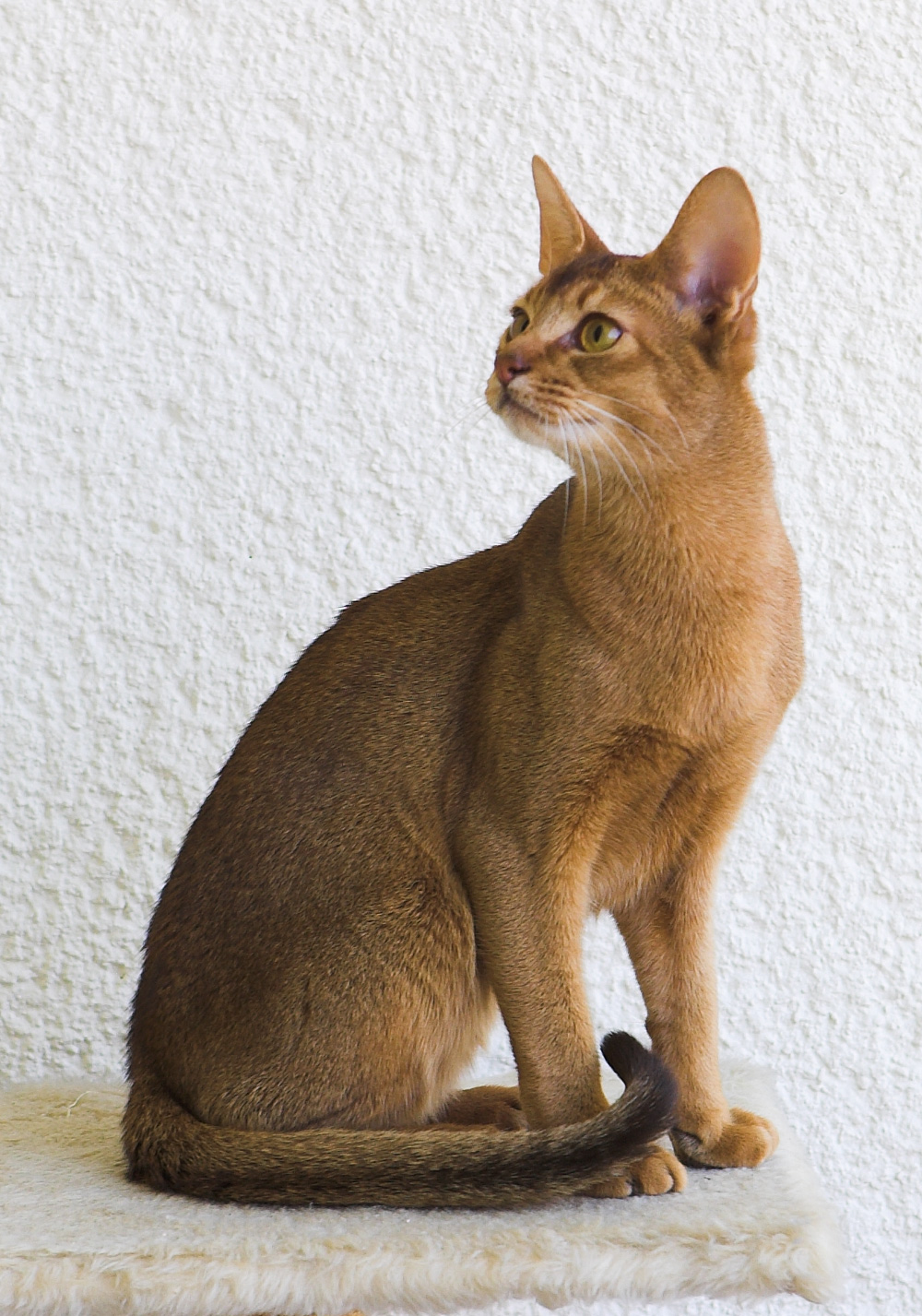
The Abyssinian is one of the oldest known cat breeds, with origins possibly tracing to ancient Egypt or the coast of the Indian Ocean. It is a slender, athletic cat with a distinctive ticked tabby coat that gives it a wild, lithe appearance. Abyssinians are intensely curious, active, and highly intelligent, thriving in stimulating environments.
Ideal Weight
3-5 kg
Height
20-25 cm
Activity Level
High (Working/Athletic)
Life Expectancy
9-15 yrs
Feeding Guide
Abyssinians have high metabolisms due to their active nature and typically do well with high-protein diets that fuel their energy. Despite their activity level, portion monitoring is still wise to avoid overfeeding. Puzzle feeders and food-dispensing toys align well with their curious nature.
Water Needs
Abyssinians are active cats that benefit from good hydration to support their kidneys and urinary tract. Fresh water available at all times is essential; fountains are often appreciated by this inquisitive breed.
Exercise Guide
Abyssinians require significant daily exercise and mental stimulation—at least 30 minutes of active play per day. They love climbing, jumping, and interactive games; tall cat trees and tunnels are ideal. Without sufficient enrichment they may become destructive or anxious.
Common Health Issues in Abyssinians
- Progressive retinal atrophy (PRA)
- Renal amyloidosis
- Pyruvate kinase deficiency
- Dental disease
- Hyperesthesia syndrome
These are conditions commonly associated with the breed, not a diagnosis for your individual pet.
Abyssinian Calorie Calculator
Estimated Daily Calories
297 kcal
0.8
Cups / day
102
Grams / day
Based on a generic 350 kcal/cup food. Use the full Calorie Calculator to enter your food's exact calorie density.
Abyssinian FAQs
How much should I feed a Abyssinian?
Abyssinians have high metabolisms due to their active nature and typically do well with high-protein diets that fuel their energy. Despite their activity level, portion monitoring is still wise to avoid overfeeding. Puzzle feeders and food-dispensing toys align well with their curious nature. For a personalized daily calorie and portion estimate based on your Abyssinian's exact weight, age, and activity level, use the calculator above or our full Calorie Calculator.
How much exercise does a Abyssinian need?
Abyssinians generally have high exercise needs. Abyssinians require significant daily exercise and mental stimulation—at least 30 minutes of active play per day. They love climbing, jumping, and interactive games; tall cat trees and tunnels are ideal. Without sufficient enrichment they may become destructive or anxious.
How much water does a Abyssinian need?
Abyssinians are active cats that benefit from good hydration to support their kidneys and urinary tract. Fresh water available at all times is essential; fountains are often appreciated by this inquisitive breed. As a general guideline, most cats need roughly 50-60 ml of water per kg of body weight daily -- use our Water Intake Calculator for an estimate based on your pet's exact weight.
What health issues are common in Abyssinians?
Abyssinians are commonly associated with Progressive retinal atrophy (PRA), Renal amyloidosis, Pyruvate kinase deficiency, Dental disease, and Hyperesthesia syndrome. This is general educational information, not a diagnosis -- regular veterinary checkups are the best way to catch and manage breed-related conditions early.
How big does a Abyssinian get?
A fully grown Abyssinian typically weighs 3.0-5.0 kg (7-11 lbs) and stands about 20-25 cm (8-10 in) tall at the shoulder, with a typical life expectancy of 9-15 years.
Medical Disclaimer
This tool provides general, educational estimates and is not a substitute for professional veterinary advice, diagnosis, or treatment. Breed-based estimates for the Abyssinian are general guidance and vary by individual dog or cat. Always consult your veterinarian about your pet's specific health needs before making changes to their diet, water intake, or care routine.
Related Cat Breeds
Compare the Abyssinian to Another Breed
From the Blog
Why Is My Cat Always Hungry? 6 Common Causes
A cat that always seems hungry isn't always overeating out of habit. Here are the most common medical and behavioral reasons, and how to tell which one applies to your cat.
Abyssinian Feeding Guide
Abyssinians are high-energy cats with fast metabolisms that thrive on protein-rich meals. Learn how much to feed, when to feed, and how to keep this active breed at its best through every life stage.
Abyssinian Ideal Weight Guide
Abyssinians are naturally lean and athletic cats, and knowing what a healthy weight looks like for this breed helps owners distinguish a fit physique from an underweight one. This guide covers ideal weight ranges, body condition scoring, and how to spot true overweight in this svelte breed.
Abyssinian Growth Chart: What to Expect
Abyssinians reach adult size faster than larger breeds, typically filling out by around 12 months. This guide walks through the growth milestones, expected weight at each stage, and how to tell whether your kitten is growing on track.
Abyssinian Kitten Guide
Raising an Abyssinian kitten means meeting the needs of one of the most energetic and curious cat breeds from day one. This guide covers feeding, growth, socialization, and health care for Abyssinian kittens through their first year.
Abyssinian Senior Care Guide
Abyssinians are considered senior cats at around 9–10 years, though many live healthily to 15 years with good care. This guide covers the breed-specific health issues to watch for in older age and how to adapt feeding, activity, and veterinary care as your Abyssinian ages.
More Tools
Calorie Calculator
Full calorie calculator with custom food density.
Weight Checker
Check if your Abyssinian is at a healthy weight.
Body Condition Score Calculator
Assess your Abyssinian's body condition with a simple visual score.
Cat Age Calculator
Convert your Abyssinian's age into human years.
Water Intake Calculator
Estimate how much water your Abyssinian needs daily.
All Cat Breeds
Browse the top 20 cat breeds.