
Non-Sporting · Rank #25 Most Popular Dog Breed
Boston Terrier
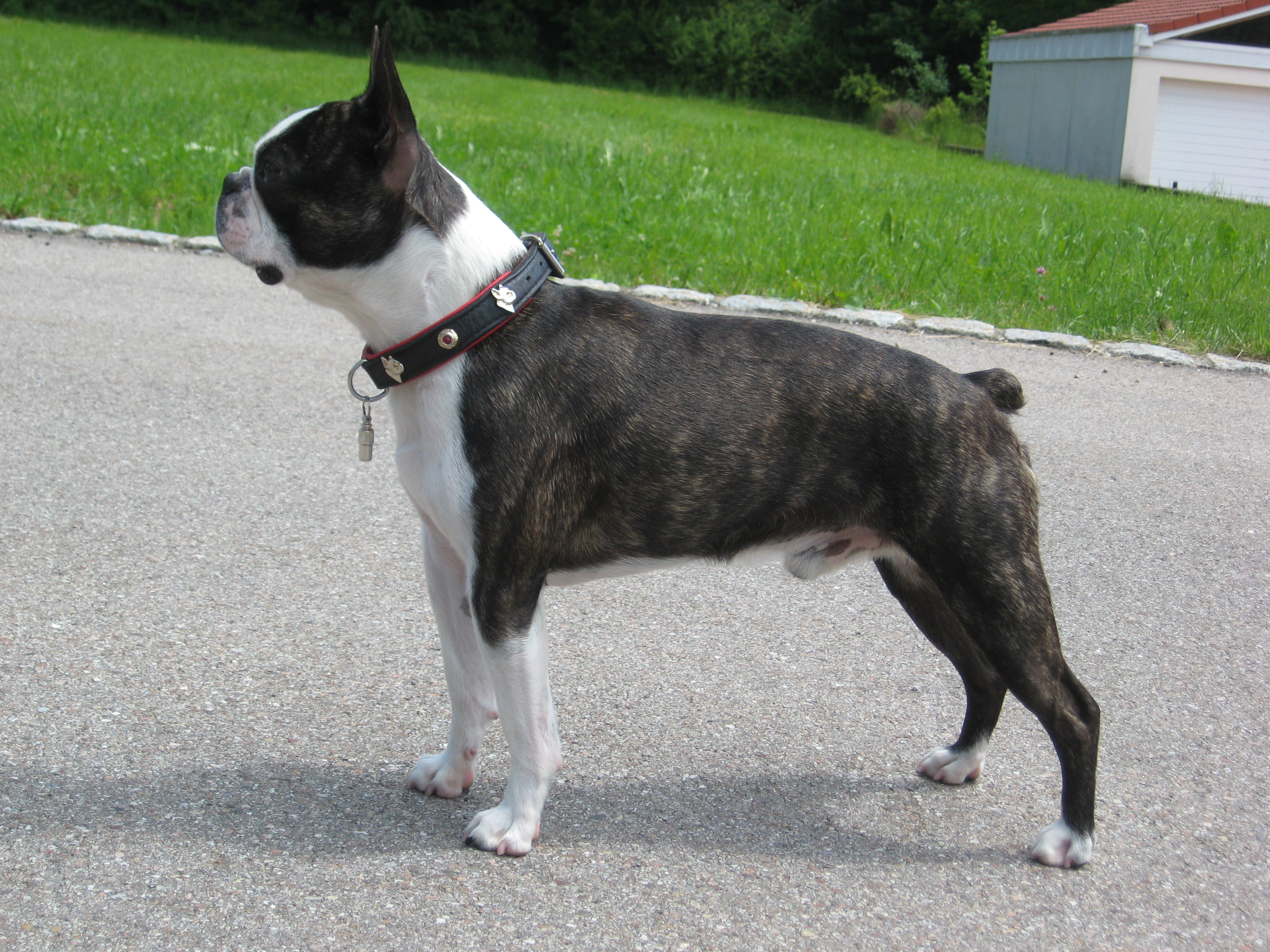
The Boston Terrier was developed in Boston, Massachusetts in the late 1800s, making it one of the few breeds originating in the United States. It was created by crossing English Bulldogs with White English Terriers and was the first non-sporting dog recognized by the AKC in 1893. Known as the 'American Gentleman' for its tuxedo-like black and white coat, the Boston Terrier is lively, intelligent, and friendly. It is a compact, well-muscled breed well suited to urban living.
Ideal Weight
4.5-11.3 kg
Height
25-43 cm
Activity Level
Moderate (Daily Walks)
Life Expectancy
11-13 yrs
Feeding Guide
Boston Terriers are prone to obesity and flatulence, so a measured diet of high-quality food with two meals per day is recommended. Avoid foods that increase gas production, and limit treats. Their brachycephalic structure means they gulp air while eating, so slow-feeder bowls can help reduce bloating.
Water Needs
Boston Terriers are brachycephalic and heat-sensitive; always provide fresh, cool water and be especially vigilant about hydration during warm weather or exercise.
Exercise Guide
Boston Terriers need around 30–60 minutes of moderate daily exercise including walks and play. Outdoor activity should be limited in hot or humid conditions due to their shortened airways, and they should never be over-exerted.
Common Health Issues in Boston Terriers
- Brachycephalic Obstructive Airway Syndrome
- Patellar Luxation
- Corneal Ulcers
- Deafness (in white-marked individuals)
These are conditions commonly associated with the breed, not a diagnosis for your individual pet.
Boston Terrier Calorie Calculator
Estimated Daily Calories
527 kcal
1.5
Cups / day
181
Grams / day
Based on a generic 350 kcal/cup food. Use the full Calorie Calculator to enter your food's exact calorie density.
Boston Terrier FAQs
How much should I feed a Boston Terrier?
Boston Terriers are prone to obesity and flatulence, so a measured diet of high-quality food with two meals per day is recommended. Avoid foods that increase gas production, and limit treats. Their brachycephalic structure means they gulp air while eating, so slow-feeder bowls can help reduce bloating. For a personalized daily calorie and portion estimate based on your Boston Terrier's exact weight, age, and activity level, use the calculator above or our full Calorie Calculator.
How much exercise does a Boston Terrier need?
Boston Terriers generally have moderate exercise needs. Boston Terriers need around 30–60 minutes of moderate daily exercise including walks and play. Outdoor activity should be limited in hot or humid conditions due to their shortened airways, and they should never be over-exerted.
How much water does a Boston Terrier need?
Boston Terriers are brachycephalic and heat-sensitive; always provide fresh, cool water and be especially vigilant about hydration during warm weather or exercise. As a general guideline, most dogs need roughly 50-60 ml of water per kg of body weight daily -- use our Water Intake Calculator for an estimate based on your pet's exact weight.
What health issues are common in Boston Terriers?
Boston Terriers are commonly associated with Brachycephalic Obstructive Airway Syndrome, Patellar Luxation, Corneal Ulcers, and Deafness (in white-marked individuals). This is general educational information, not a diagnosis -- regular veterinary checkups are the best way to catch and manage breed-related conditions early.
How big does a Boston Terrier get?
A fully grown Boston Terrier typically weighs 4.5-11.3 kg (10-25 lbs) and stands about 25-43 cm (10-17 in) tall at the shoulder, with a typical life expectancy of 11-13 years.
Medical Disclaimer
This tool provides general, educational estimates and is not a substitute for professional veterinary advice, diagnosis, or treatment. Breed-based estimates for the Boston Terrier are general guidance and vary by individual dog or cat. Always consult your veterinarian about your pet's specific health needs before making changes to their diet, water intake, or care routine.
Related Dog Breeds
Compare the Boston Terrier to Another Breed
From the Blog
Boston Terrier Feeding Guide
Practical daily feeding guidance for Boston Terriers, including portion ranges by adult weight, meal structure, breed-specific concerns like flatulence and brachycephalic eating, and life-stage adjustments.
Boston Terrier Ideal Weight Guide
The Boston Terrier's ideal weight ranges from 4.5 to 11.3 kg (10–25 lb) across the breed's three size classes. Learn how to assess body condition for this compact, cobby breed.
Boston Terrier Growth Chart: What to Expect
Boston Terriers are a small breed that typically reach their adult weight between 10 and 14 months. Learn what growth milestones to expect and how to support healthy development.
How Many Calories Should a Boston Terrier Eat?
Daily calorie needs for a Boston Terrier depend on their weight within the breed's 4.5–11.3 kg range, activity level, and life stage. Learn how to estimate and adjust the right amount.
Boston Terrier Puppy Guide
Feeding, growth, and care guidance for Boston Terrier puppies, including breed-specific considerations like brachycephalic eating challenges and common health checks for the first year.
Boston Terrier Senior Care Guide
Boston Terriers are generally considered senior around age 7–8. Learn how to adjust their feeding and activity as they age, and which health issues deserve closer attention in their later years.
More Tools
Calorie Calculator
Full calorie calculator with custom food density.
Weight Checker
Check if your Boston Terrier is at a healthy weight.
Body Condition Score Calculator
Assess your Boston Terrier's body condition with a simple visual score.
Dog Age Calculator
Convert your Boston Terrier's age into human years.
Water Intake Calculator
Estimate how much water your Boston Terrier needs daily.
All Dog Breeds
Browse the top 50 dog breeds.