
Shorthair · Rank #19 Most Popular Cat Breed
Manx
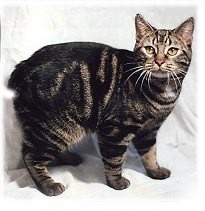
The Manx is an ancient breed originating on the Isle of Man in the British Isles, famous for its natural taillessness caused by a genetic mutation. It has a rounded, compact body, a double coat that comes in both short and long (Cymric) varieties, and notably longer hind legs that give it a distinctive rabbit-like gait. Manx cats are loyal, affectionate, and known for their dog-like devotion to their families.
Ideal Weight
3.6-5.4 kg
Height
20-25 cm
Activity Level
Moderate (Daily Walks)
Life Expectancy
9-13 yrs
Feeding Guide
Manx cats have average dietary requirements and do well on high-quality commercial diets. They can be prone to weight gain, especially as they mature, so portion-controlled meals twice daily are recommended. Constipation can be an issue in some individuals, and a diet with adequate fiber and hydration helps mitigate this risk.
Water Needs
Good hydration is particularly important for Manx cats given their predisposition to constipation and Manx syndrome-related complications. Wet food as part of the diet helps maintain bowel health and adequate fluid intake.
Exercise Guide
Manx cats are moderately active and enjoy interactive play sessions of 15–20 minutes daily. Their powerful hind legs make them excellent jumpers despite their stocky build. Regular play keeps their weight in check and their minds engaged.
Common Health Issues in Manxs
- Manx syndrome (sacrococcygeal dysgenesis)
- Constipation and megacolon
- Corneal dystrophy
- Arthritis
- Spina bifida
These are conditions commonly associated with the breed, not a diagnosis for your individual pet.
Manx Calorie Calculator
Estimated Daily Calories
259 kcal
0.7
Cups / day
89
Grams / day
Based on a generic 350 kcal/cup food. Use the full Calorie Calculator to enter your food's exact calorie density.
Manx FAQs
How much should I feed a Manx?
Manx cats have average dietary requirements and do well on high-quality commercial diets. They can be prone to weight gain, especially as they mature, so portion-controlled meals twice daily are recommended. Constipation can be an issue in some individuals, and a diet with adequate fiber and hydration helps mitigate this risk. For a personalized daily calorie and portion estimate based on your Manx's exact weight, age, and activity level, use the calculator above or our full Calorie Calculator.
How much exercise does a Manx need?
Manxs generally have moderate exercise needs. Manx cats are moderately active and enjoy interactive play sessions of 15–20 minutes daily. Their powerful hind legs make them excellent jumpers despite their stocky build. Regular play keeps their weight in check and their minds engaged.
How much water does a Manx need?
Good hydration is particularly important for Manx cats given their predisposition to constipation and Manx syndrome-related complications. Wet food as part of the diet helps maintain bowel health and adequate fluid intake. As a general guideline, most cats need roughly 50-60 ml of water per kg of body weight daily -- use our Water Intake Calculator for an estimate based on your pet's exact weight.
What health issues are common in Manxs?
Manxs are commonly associated with Manx syndrome (sacrococcygeal dysgenesis), Constipation and megacolon, Corneal dystrophy, Arthritis, and Spina bifida. This is general educational information, not a diagnosis -- regular veterinary checkups are the best way to catch and manage breed-related conditions early.
How big does a Manx get?
A fully grown Manx typically weighs 3.6-5.4 kg (8-12 lbs) and stands about 20-25 cm (8-10 in) tall at the shoulder, with a typical life expectancy of 9-13 years.
Medical Disclaimer
This tool provides general, educational estimates and is not a substitute for professional veterinary advice, diagnosis, or treatment. Breed-based estimates for the Manx are general guidance and vary by individual dog or cat. Always consult your veterinarian about your pet's specific health needs before making changes to their diet, water intake, or care routine.
Related Cat Breeds
Compare the Manx to Another Breed
From the Blog
Manx Feeding Guide
Practical daily feeding guidance for the Manx cat, covering portion sizes, meal frequency, life-stage adjustments, and breed-specific considerations like constipation risk.
Manx Ideal Weight Guide
Learn the ideal weight range for Manx cats, how their compact cobby build affects body condition assessment, and how to tell if your Manx is carrying extra pounds.
Manx Growth Chart: What to Expect
Understand how Manx kittens grow from birth through adulthood, typical weight milestones, and when this compact breed reaches its full size.
Manx Kitten Guide
Everything you need to know about feeding, growing, and caring for a Manx kitten — from weaning through the first year of life.
Manx Senior Care Guide
How to support your aging Manx cat's health through targeted nutrition, adjusted activity, and vigilance for the breed-specific conditions that become more prominent in later life.
More Tools
Calorie Calculator
Full calorie calculator with custom food density.
Weight Checker
Check if your Manx is at a healthy weight.
Body Condition Score Calculator
Assess your Manx's body condition with a simple visual score.
Cat Age Calculator
Convert your Manx's age into human years.
Water Intake Calculator
Estimate how much water your Manx needs daily.
All Cat Breeds
Browse the top 20 cat breeds.